


When a Pflugerville resident posted what he’d found in the city’s Flock search logs to Facebook on August 24, the city council voted unanimously the next day to kill its Flock contract. Up in the DFW suburb of Colleyville, the logs are even more ridiculous, with 2,268 times as many searches from other states as Pflugerville’s.
But that’s not the strangest thing we found.
On the afternoon of Wednesday, August 19, the Colleyville Police Department’s Flock account changed two settings relating to immigration. Colleyville released its Flock event log to one of our readers.
At 3:40 p.m., the department took both “Immigration” options off the list of reasons its own officers can pick when they run a search. At 4:34 p.m., it switched on a filter that blocks everyone else’s immigration searches from its cameras:
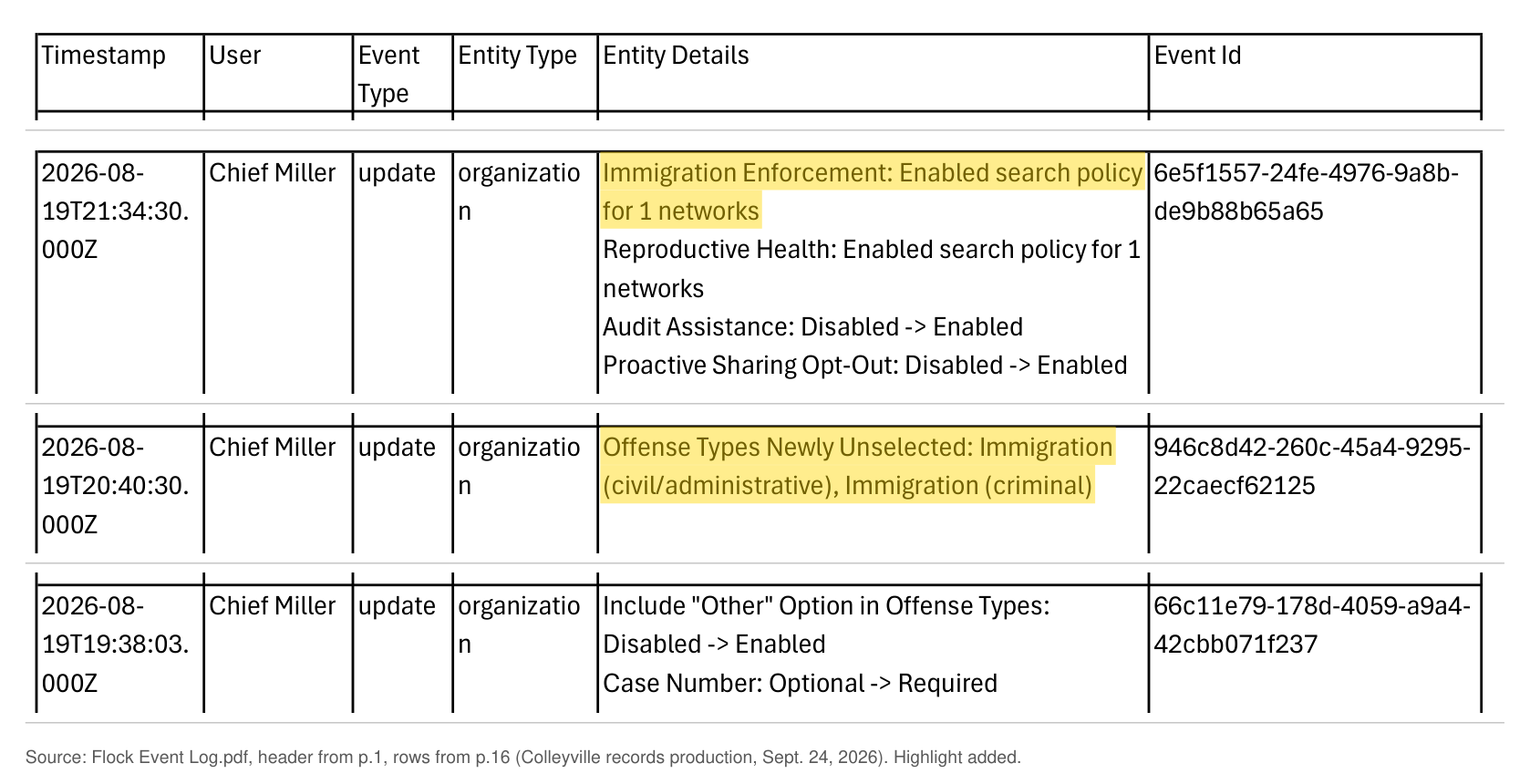
The log lists both changes under Police Chief Michael Miller’s name.
From March 1 until that afternoon, outside agencies ran 2,970 searches labeled “immigration” through networks that include Colleyville’s spy cameras. They came from 182 different agency accounts, most of the searches coming from Texas.
After 4:34 p.m., not a single immigration search out of 131,446 searches over the next 11 days.
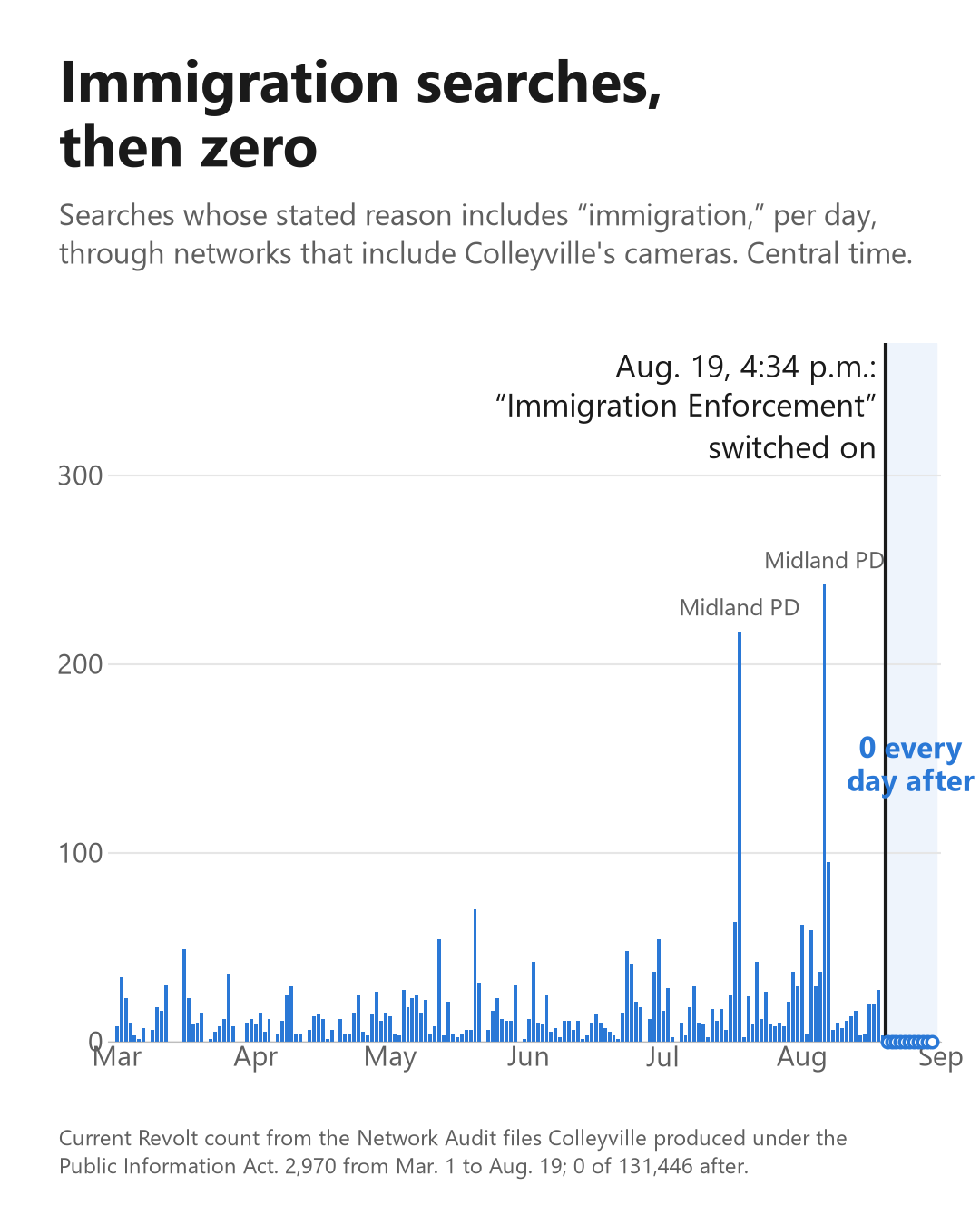
It would appear Colleyville’s omnipresent spy grid now blocks immigration searches, making it harder for law enforcement to find and remove illegal aliens.
Advertisement:
The 37 Most Obsessed-Over Gadgets of the Year

The 37 gadgets people can’t stop talking about this year. Several are already running low.
We can also see who was running the immigration searches. The Midland Police Department ran 980 of the 2,970. On August 3, seven of the Galveston Sheriff Office’s searches into Colleyville’s system went in with this reason:
“Immigration (civil/administrative) - 287g investigation - target individuals for removal”
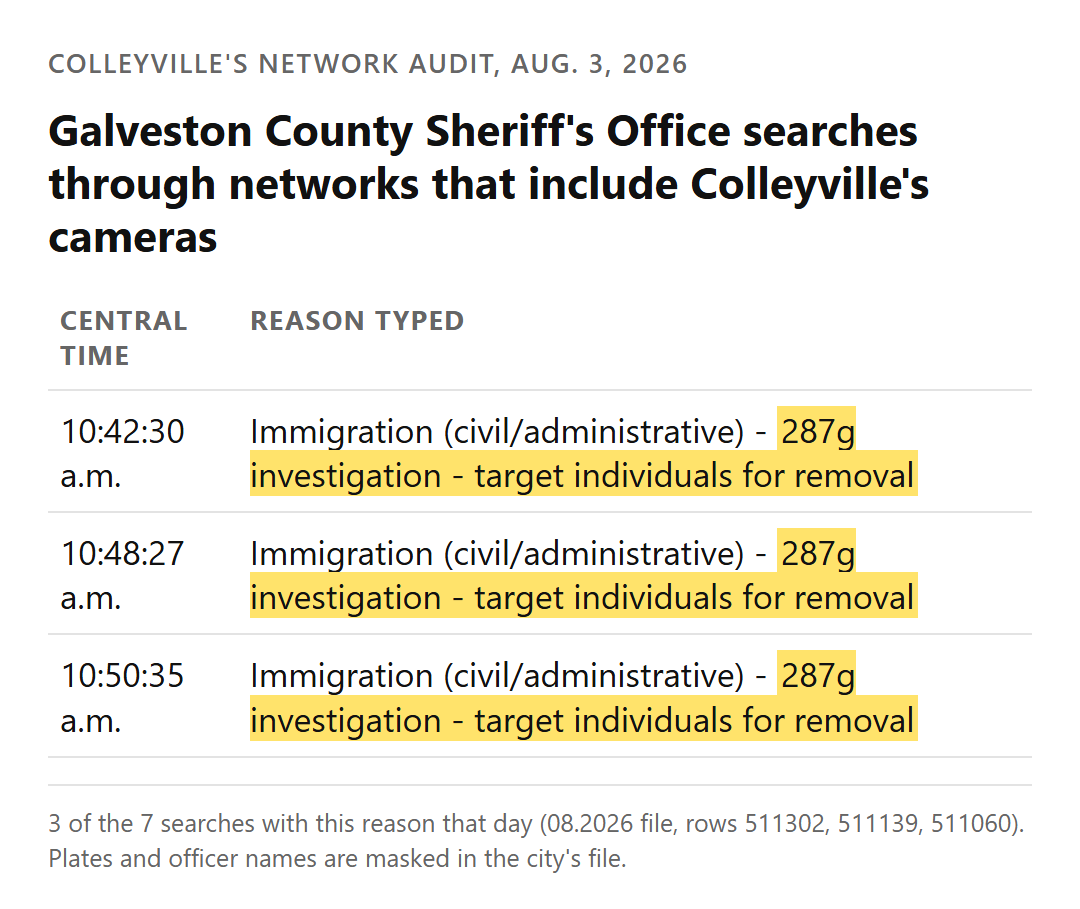
287(g) is the program that lets local officers help enforce immigration law.
The last immigration-labeled search through Colleyville’s network came from Midland at 2:46 p.m. on August 19. About 2 hours before the chief flipped the switch.
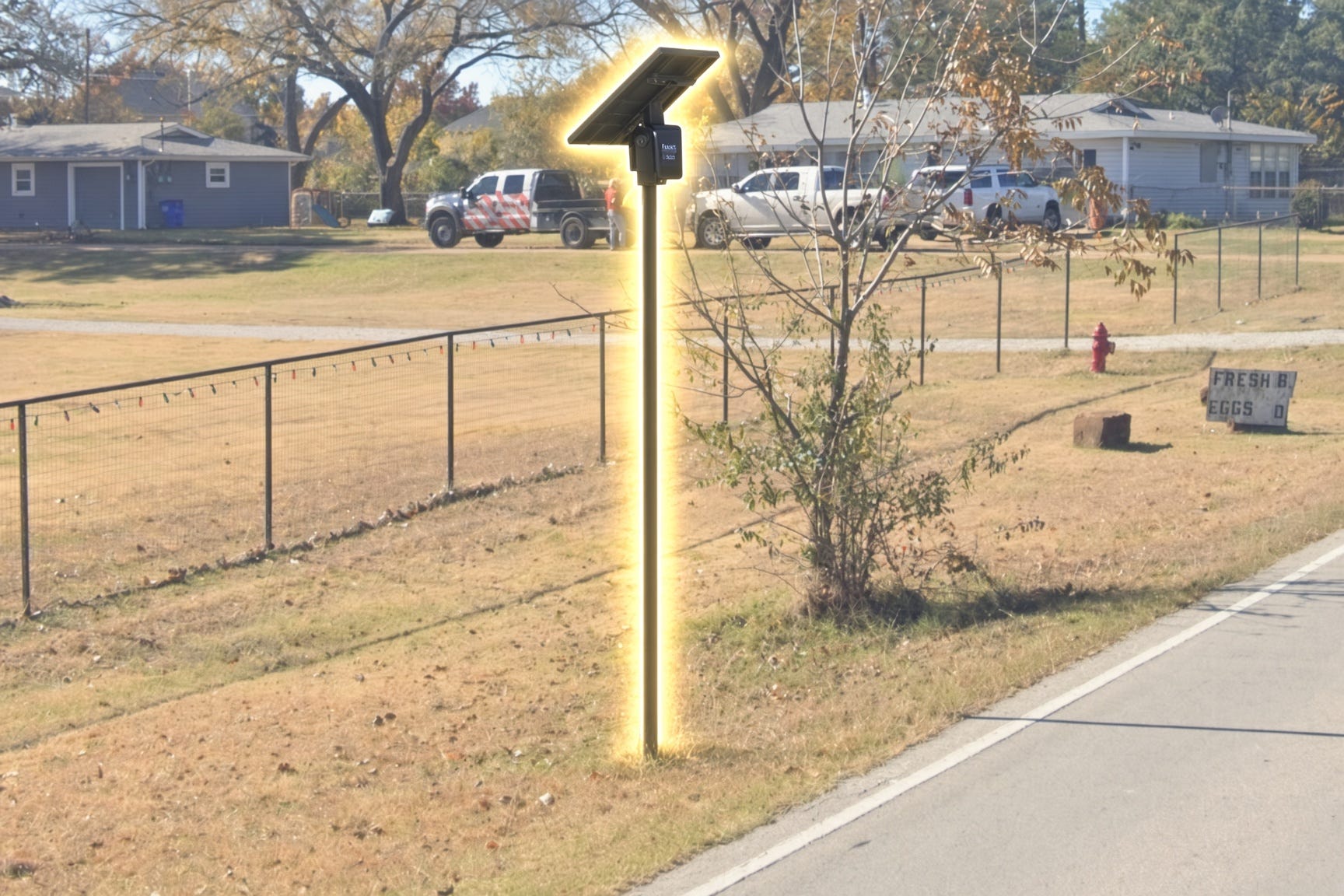
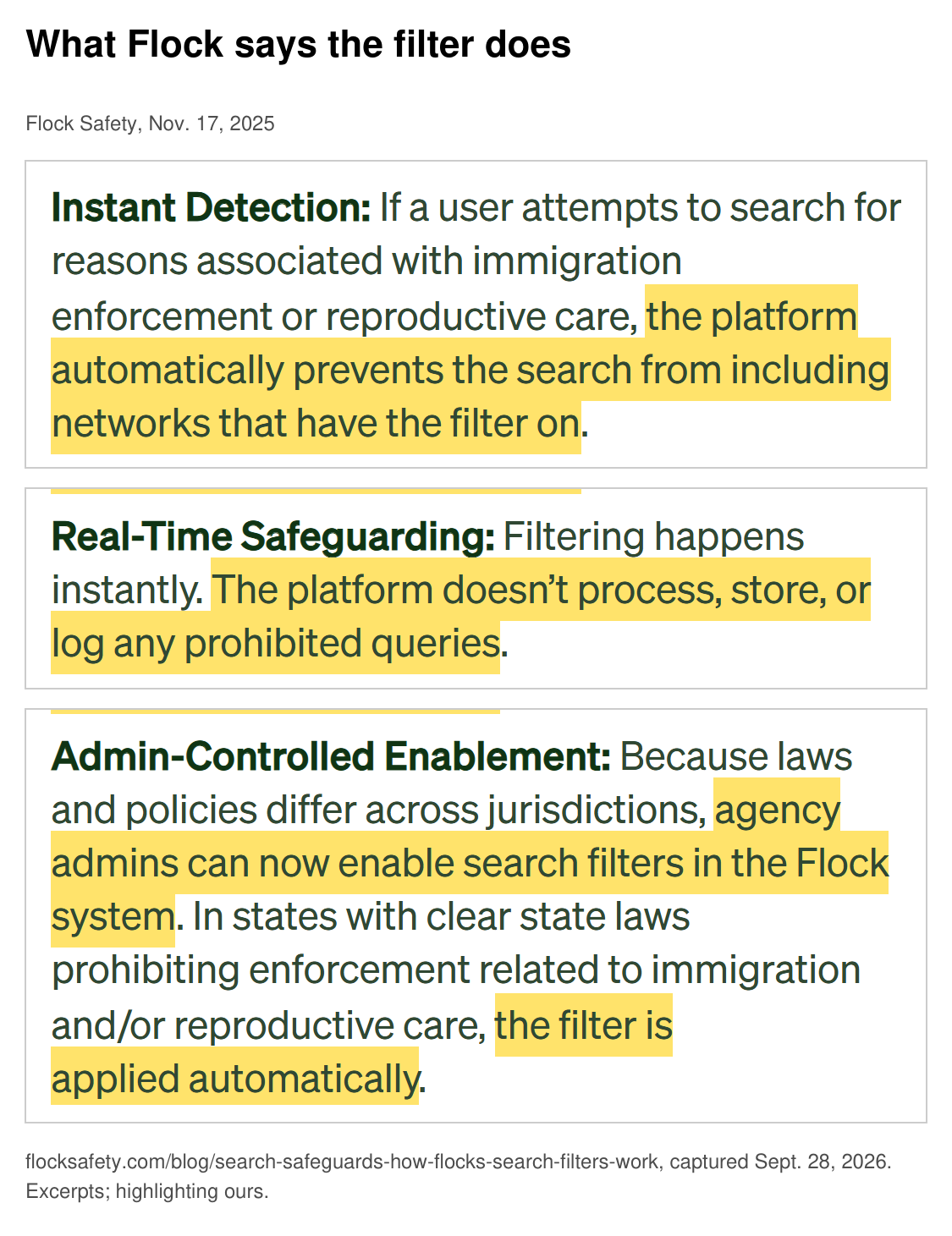
The event log doesn’t explain what the setting does. Flock’s website describes an immigration filter and a “reproductive care” filter that an agency’s admin can switch on. In a November 2025 post, the company says:
“If a user attempts to search for reasons associated with immigration enforcement or reproductive care, the platform automatically prevents the search from including networks that have the filter on.”
This means the filter is a block. It also states “The platform doesn’t process, store, or log any prohibited queries.”
Because blocked searches aren’t logged, there’s no way to count how many immigration searches the filter turned away.
Colleyville's own officers never ran an immigration-labeled search.
Come on, Texas.
According to Flock, “In states with clear state laws prohibiting enforcement related to immigration and/or reproductive care, the filter is applied automatically.”
Flock built this filter to comply with laws passed in blue states. In Texas, it must be purposefully turned on.
Texas law goes the other way. In 2017, the Legislature passed Senate Bill 4, Texas’s ban on sanctuary policies. It bans any “local entity” from doing this:
“adopt, enforce, or endorse a policy under which the entity or department prohibits or materially limits the enforcement of immigration laws”
It defines "policy" broadly, to include "an informal, unwritten policy."
A filter that blocks immigration searches on a city’s cameras sure sounds like a policy that “materially limits the enforcement of immigration laws.” Doesn’t it?
Colleyville is in Tarrant County. Here’s what Tarrant County’s tax assessor-collector, Rick Barnes, promised voters in 2024:

Of Course, It Gets Funnier.
On the evening of August 20, Chief Michael Miller opened his department’s Flock audit log and noticed that the Gwinnett County Sheriff’s Office in Georgia was searching his cameras in Colleyville.
He emailed Flock at 6:26 p.m.:
“That was odd to me because I thought we were not sharing our data with anyone outside of Texas.”
Four minutes later, Flock’s AI answered. LOL. Thankfully, it had great news:
